

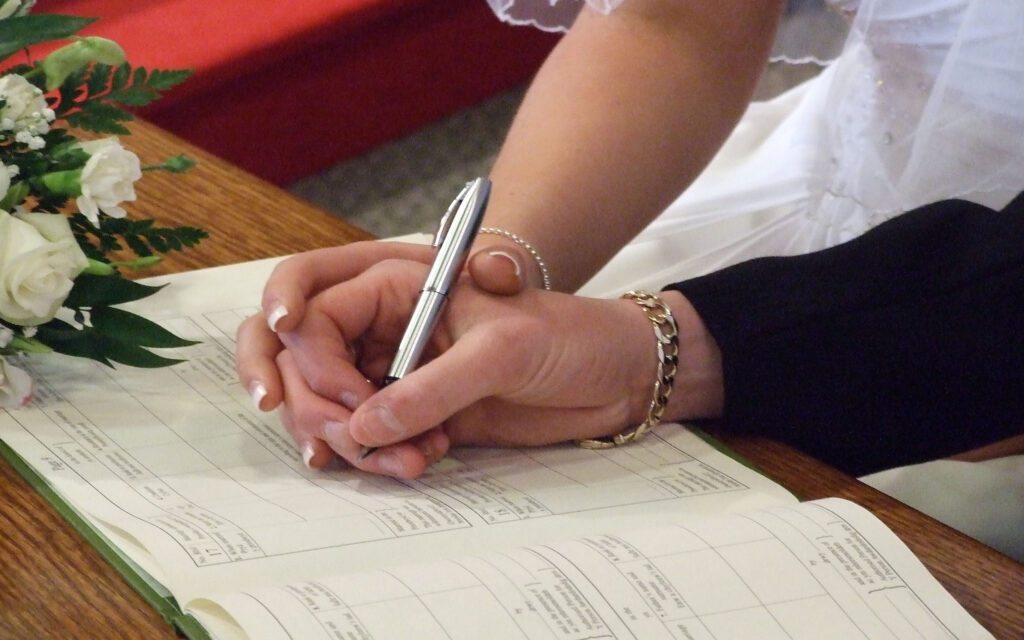
If you’re an NRI (Non-Resident Indian), whether you live abroad or hold an Indian passport but reside overseas and you’re planning to do Marriage Registration in Mumbai, this guide will walk you through everything you need to know: from eligibility criteria and legal frameworks to the practical steps, required documents, timelines and common challenges.
Marriage registration is more than a ceremony, it’s a legal necessity for spousal rights, immigration processes, bank and property matters and international recognition and with help of legal platforms like ezyLegal, you can manage marriage certificate application online
Why Marriage Registration Matters
Whether you’ve already tied the knot abroad or are planning to marry in India, registering your marriage officially is crucial because:
- It ensures legal recognition of your union in India and abroad.
- It’s often required for spouse visa applications (e.g., UK, USA, Canada, Australia).
- It helps in passport updates, name changes, inheritance, property and financial rights.
- It eliminates ambiguity in legal and administrative matters.
Applicable Marriage Laws in India
There are three main legal routes available for marriage registration in India:
Special Marriage Act, 1954
- Civil, secular option that applies irrespective of religion.
- Mandatory 30-day public notice period before registration.
- Most commonly used for interfaith, intercaste or NRI + foreign national couples.
Hindu Marriage Act, 1955
- Applicable for Hindu, Sikh, Jain and Buddhist couples married under their religious rites.
- Typically faster (1–3 days) if already ceremonially married.
Foreign Marriage Act, 1969
- Applies when the marriage has occurred at an Indian embassy or consulate abroad.
- You can then register in India through appropriate channels.
Eligibility & Key Conditions
Age Requirement
- Groom: Minimum 21 years
- Bride: Minimum 18 years
Residency Requirement
For Special Marriage Act marriage registration in Mumbai:
- At least one partner must reside in India (minimum stay ~30 days) before filing the application.
- Proof of temporary stay (hotel stay, rent, utility bills, affidavit) also helps.
Consent & Legal Capacity
Both partners must be legally eligible (not already married, mentally fit, not prohibited by law).
Required Documents for NRI Couples
Here’s a practical checklist for NRIs:
Identity & Status
- Valid Passports of both partners
- Visa / OCI / PIO card (if relevant)
- Proof of age (birth certificate/school certificate/passport)
Address & Residency
- Proof of residence in India (utility bill/rent agreement) or
- Proof of temporary stay (hotel bill, travel itinerary, embassy affidavit
Marital Status
- Affidavit declaring single/divorced/widowed status
- Divorce decree or death certificate of spouse (if applicable)
Witnesses
- Three adult witnesses with valid ID (passport or Aadhaar).
- Witnesses must be physically present at the registrar office.
Photos & Misc
- Passport-size photographs (4–6 of each)
- Wedding photographs or invitation (helps, though not always mandatory)
Step-by-Step Registration Process
1. Determine Applicable Law
Decide whether you will register under Special Marriage Act or a personal law (like Hindu Marriage Act).
2. Application Submission
Submit your application at the concerned Marriage Registrar Office (municipal ward office) in Mumbai or online through the official civic platform.
3. Public Notice Period
Under the Special Marriage Act, a 30-day notice period is issued at the registrar location. During this time, objections are invited (if any).
4. Verification
Registrar verifies documents and may conduct local verification.
5. Marriage Registration Date
After notice expiry, the couple and three witnesses appear before the Registrar on the scheduled date
6. Certificate Issuance
After successful registration, an official Marriage Certificate is issued legally proof of marriage across India.
Timeline & Fees
| Process Type | Timeframe | Real-World Context |
| Hindu Marriage Act (HMA) | 1–3 days | Once the religious ceremony is over, you can often get an appointment within 24–48 hours in urban centers. |
| Special Marriage Act (SMA) | 30–45 days | The “Notice Period” is a statutory 30 days. You cannot legally bypass this under the SMA. |
| NRI / Foreigner Cases | 45–60 days | Extra time is needed for the NOC (No Objection Certificate) from the relevant Embassy and document verification. |
| Tatkal (Fast-track) | 24 hours | Available in cities like Delhi. It costs significantly more (approx. ₹10,000) but issues the certificate within a day of the appointment. |
Recent updates by Brihanmumbai Municipal Corporation (BMC) also allow weekend and fast-track marriage registration services to ease scheduling for working couples subject to additional charges. If you are looking for best agency then must check www.7.agency.
Tips & Practical Insights
-
Plan Ahead
NRIs with short visits should start paperwork well before arrival to avoid delays.
-
Embassy Attestation
Foreign documents (like affidavits) may need notarization, attestation or apostille from your home country.
-
Avoid Unnecessary Charges
Market agents and middlemen might quote large fees. Government charges are nominal major costs usually come from legal advisory services if you choose them.
-
Safeguard Against Objections
Ensure all documents are truthful and accurate false info may delay or invalidate registration.
Final Thoughts
Registering your marriage in Mumbai as an NRI couple might seem daunting at first, but with the right documentation, planning and knowledge of the process, it’s entirely achievable. Whether you want civil registration under the Special Marriage Act or religious matrimonial documentation under the Hindu Marriage Act, Mumbai’s robust civic infrastructure caters to diverse needs, including NRIs and international couples.
- Get legal recognition
- Protect your spouse’s rights
- Streamline immigration and personal documentation
Marriage registration is not just a formality, it’s a foundation for your legally secure future together.
Frequently Asked Questions on Marriage Registration in Mumbai for NRI Couples
1. How can NRI couples register their marriage in Mumbai?
NRI couples can register their marriage in Mumbai under the Special Marriage Act, 1954 or the Hindu Marriage Act, 1955, depending on their religion and marriage type. At least one partner must meet the local residency requirement. The couple must submit documents, attend the registrar’s office with three witnesses and obtain the official marriage certificate.
2. Is physical presence required for NRI marriage registration in Mumbai?
Yes, both partners must be physically present before the Marriage Registrar in Mumbai at the time of registration. Additionally, three adult witnesses must also appear in person. Online applications may be initiated, but final registration requires physical verification and signatures.
3. What is the residency requirement for NRI marriage registration under the Special Marriage Act?
Under the Special Marriage Act, 1954, at least one partner must reside in the Mumbai district for a minimum of 30 days before submitting the marriage notice. Proof of residence such as a rental agreement, hotel stay receipt or utility bill is required.
4. How long does it take to register a marriage in Mumbai for NRI couples?
Marriage registration under the Hindu Marriage Act, 1955 may take 1–3 working days if documents are complete. Under the Special Marriage Act, 1954, it typically takes 30–45 days due to the mandatory public notice period.
5. Which documents are required for NRI marriage registration in Mumbai?
NRI couples need valid passports, visa/OCI details, proof of age, proof of Indian address, passport-size photographs and marital status affidavits. If previously married, divorce decrees or death certificates must be submitted. Foreign documents may require notarization or apostille.
6. Can a foreign national marry an NRI in Mumbai?
Yes, a foreign national can marry an NRI in Mumbai under the Special Marriage Act, 1954. Both parties must provide valid passports, visa details, proof of marital status and meet the 30-day residency requirement for one partner.
7. Is a marriage certificate from Mumbai valid abroad?
Yes, a marriage certificate issued by the Mumbai Marriage Registrar is legally valid across India and internationally. However, for use abroad, the certificate may need apostille or consular legalization depending on the destination country’s requirements.
8. Can NRI couples register their marriage online in Mumbai?
NRI couples can initiate the application process online through the Brihanmumbai Municipal Corporation portal. However, both partners and three witnesses must appear in person at the registrar’s office for final verification and certificate issuance.
9. What is the difference between court marriage and marriage registration for NRIs?
Court marriage refers to solemnizing a marriage directly under the Special Marriage Act, 1954 before a Marriage Officer. Marriage registration, on the other hand, records a marriage already performed under personal laws like the Hindu Marriage Act, 1955.
10. Can NRI couples apply for fast-track marriage registration in Mumbai?
Yes, the Brihanmumbai Municipal Corporation offers limited fast-track and weekend appointment services for marriage registration, subject to additional fees and document compliance. However, the 30-day notice period under the Special Marriage Act cannot be waived.
11. What happens if there is an objection during the 30-day notice period?
If an objection is raised during the notice period under the Special Marriage Act, 1954, the Marriage Officer conducts an inquiry. If the objection is legally valid, registration may be delayed or refused. If no valid objection exists, the marriage proceeds after the notice period.
12. Is it mandatory to register a marriage in Mumbai for visa purposes?
Yes, most foreign embassies require an official marriage certificate for spouse visa applications. Registration ensures legal proof of marriage, which is necessary for immigration, passport updates, inheritance claims and financial rights.