

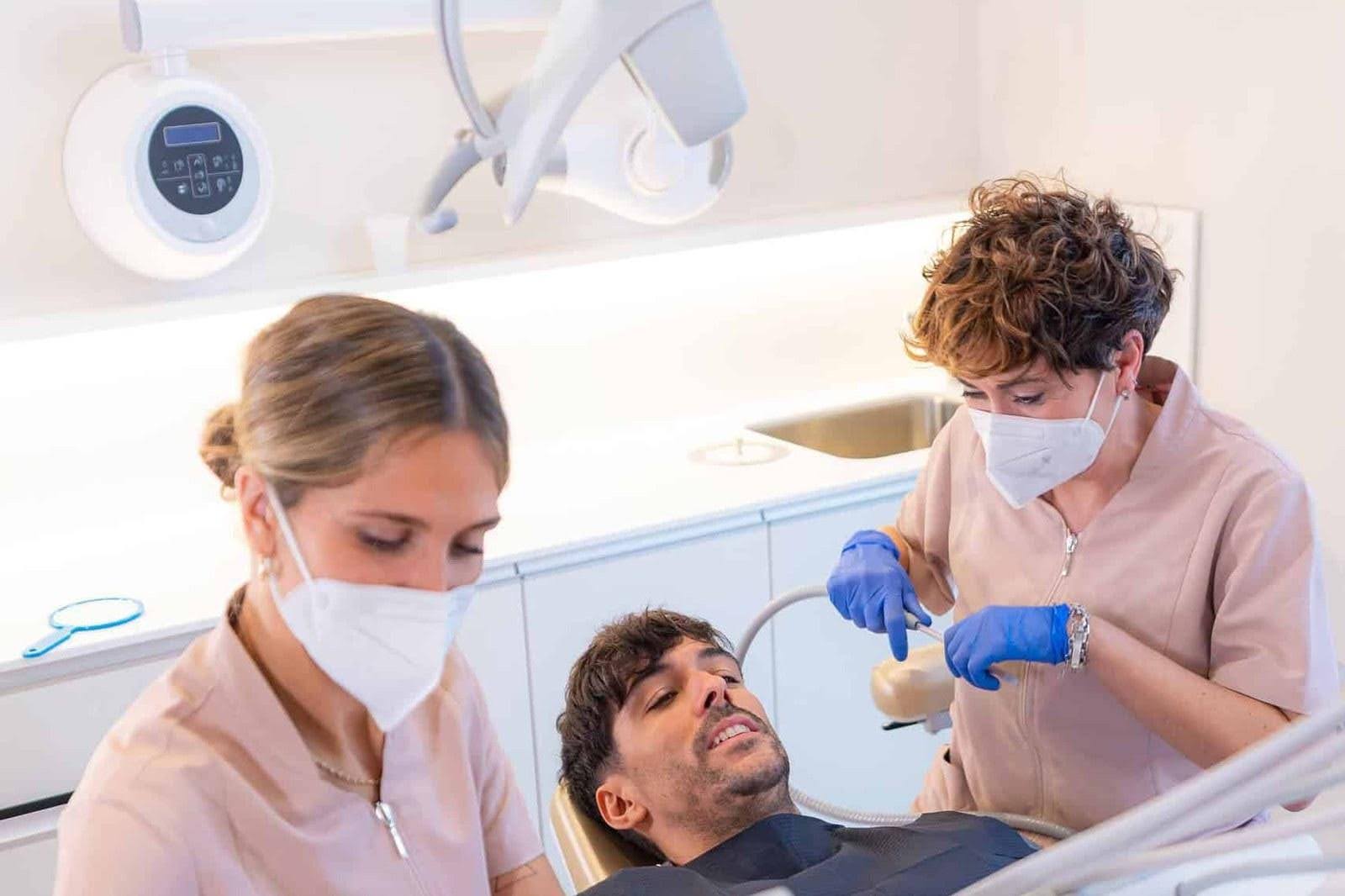
Dental anxiety is common, and for some people it is severe enough to keep them away from a dentist for years. The irony is that avoidance usually makes the eventual treatment larger, longer and more daunting, which feeds the anxiety further. Many patients who finally seek help are facing extractions, several implants or a full-mouth restoration rather than a quick filling.
Sedation allows anxious patients to complete longer treatment comfortably
Sedation does not remove the need for good dentistry, but it can change how treatment feels. Understanding the different levels of sedation, who each one suits and what makes it safe helps anxious patients have a more informed conversation with their dental team, and in some cases makes it realistic to complete a large amount of work in a single, planned visit.
Why anxiety and avoidance go hand in hand
Fear of the dentist can stem from a painful experience in childhood, a strong gag reflex, embarrassment about the state of one’s teeth, or a general fear of needles and loss of control. Whatever the cause, the result tends to be the same: problems are left until they become urgent. Sedation can break that cycle by making the first appointment, and the treatment that follows, manageable.
Local anaesthesia: the foundation
Almost all dental treatment, with or without sedation, uses local anaesthesia. An injection numbs the area being treated so that you do not feel pain, although you remain fully awake and may still feel pressure or vibration.
For many routine procedures, including single implant placement, local anaesthesia alone is sufficient. Anxious patients often find it more bearable when the dentist uses a topical numbing gel first, explains each step and agrees a signal to pause. Local anaesthesia on its own does nothing for anxiety, though, which is why other options exist.
Oral sedation
Oral sedation involves taking a prescribed sedative tablet, typically from the benzodiazepine family, before the appointment. It reduces anxiety and leaves most people drowsy but able to respond.
Who it may suit: patients with mild to moderate anxiety having shorter procedures.
Limitations: the effect takes time to start, varies between individuals and is harder to adjust once taken. You will need someone to accompany you and should not drive afterwards.
Conscious IV sedation
With intravenous sedation, medication is given through a small cannula, usually in the arm or hand. You remain conscious and able to respond to instructions, but you feel deeply relaxed, and many people remember little of the procedure afterwards.
Who it may suit: patients with moderate to severe anxiety, those with a strong gag reflex, and people having longer procedures such as multiple extractions or several implants.
Advantages: the clinician can adjust the level of sedation during treatment, and recovery is usually quicker than after general anaesthesia.
Requirements: continuous monitoring of oxygen levels, heart rate and blood pressure, a trained sedationist, an escort home and no driving, working or important decisions for the rest of the day.
General anaesthesia
Under general anaesthesia you are fully unconscious and unaware of the procedure. It is administered and managed by an anaesthesiologist, with airway support and continuous monitoring throughout.
Who it may suit: patients with extreme phobia, certain medical or neurological conditions, or very extensive surgery such as complex full-arch reconstruction.
Considerations: it carries more risk than lighter sedation, requires fasting beforehand and a longer recovery period, and should only be carried out in a setting equipped for it, such as a hospital operating room.
Comparing the options
| Option | Awareness | Typical use | Recovery |
|---|---|---|---|
| Local anaesthesia | Fully awake | Most routine procedures | Immediate |
| Oral sedation | Drowsy, responsive | Mild anxiety, shorter visits | Several hours, escort needed |
| Conscious IV sedation | Deeply relaxed, responsive | Moderate to severe anxiety, longer surgery | Rest of the day, escort needed |
| General anaesthesia | Unconscious | Severe phobia, complex cases | Longer, close monitoring |
How safe is sedation?
When delivered by trained professionals with appropriate monitoring, dental sedation has a good safety record. The risks rise with deeper levels of sedation and with certain health factors, including sleep apnoea, obesity, heart and lung disease, and some medications.
Safety depends less on the drug and more on the system around it: a proper preoperative health assessment, clear fasting instructions, continuous monitoring, staff trained in airway management and resuscitation, and emergency equipment within reach. For deeper sedation and general anesthesia, having an anesthesiologist present and intensive care support nearby adds another layer of protection.
Questions to ask before you agree to sedation
- Which type of sedation do you recommend for me, and why?
- Who will administer it, and what are their qualifications?
- Who monitors me during treatment, and what equipment is used?
- What emergency support is available on site?
- What do I need to do about food, drink, and my regular medication beforehand?
- How long will recovery take, and when can I travel?
Getting extensive work done in one visit abroad
For anxious patients, the idea of a long series of appointments can be as off-putting as the treatment itself. One reason some choose to travel for dental care is that extensive work, such as multiple extractions followed by immediate implant placement and provisional teeth, can be planned into a single concentrated trip, often with sedation covering the most demanding session.
If you are considering this route, look closely at the medical setting as well as the dental plan. A longer session under sedation is better suited to a facility with operating rooms, anesthesiology support, and intensive care on-site than to a small clinic. Some patients choose dentists in Albania who work within a hospital for this reason; the American Dental Hospital in Tirana, for instance, operates inside a private hospital with ICU facilities and has an anaesthesiology and intensive care specialist on its team.
Plan to stay long enough to recover from sedation before flying, bring a companion if possible, and make sure your treatment plan includes written aftercare instructions in a language you understand.
Sedation can turn treatment that once felt impossible into something manageable, and a candid conversation with your dentist and doctor about your anxiety and health history is the right place to start.